

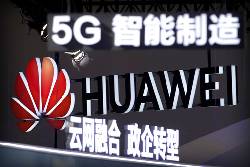
NEW YORK (AP) — A U.S. jury convicted Chinese tech giant Huawei Technologies on Tuesday of conspiracy to steal trade secrets and bank fraud as it grew into one of the world’s biggest suppliers of gear for wireless telecommunications networks.
However, jurors acquitted the company of the most serious charge it faced: engaging in a criminal racketeering conspiracy. The charge most often appears in organized crime and drug cases, but prosecutors used it to accuse Huawei of operating in an illicit fashion to repeatedly poach intellectual property and technological secrets from competitors and partners in the U.S. and elsewhere.
Huawei was also accused of doing business in countries subject to U.S. sanctions, including Iran and North Korea, and making false statements to U.S. government officials and banks as part of an effort to hide its misdeeds.
Huawei attorney Brian Heberlig said the company would appeal the convictions but was heartened by the acquittals on racketeering conspiracy and another charge, conspiracy to obstruct justice. He called those not guilty verdicts “a profound rejection of the United States’ narratives of what Huawei is” and “a vindication of the company and its good-faith compliance culture.”
“The allegations that the government made in this case overreached and simply weren’t consistent with the successful, innovative and hardworking company that we came to know and deeply respect,” Heberlig said outside court.
Huawei's lawyers said U.S. investigators had used isolated episodes of wrongdoing by a few of Huawei’s more than 200,000 employees to spin a false narrative about a grand conspiracy that didn’t actually exist.
The company could face billions of dollars in penalties.
It's unclear what effect the verdict might have on Huawei's global fortunes. The company hasn't been allowed to sell equipment to U.S. carriers for years because of security concerns. It has also been blacklisted by other Western allies, including Canada and Britain.
That hasn't stopped the company from doing a robust business elsewhere. Its smartphones and other telecom equipment are sold globally. More recently, it has expanded into chipmaking as the boom in artificial intelligence fuels demand for microprocessors, becoming an important alternative in China to chips made by companies such as Nvidia.
The U.S. announced its criminal charges against Huawei in early 2019 and later expanded the allegations. The lengthy trial began in September.
Chinese officials said the U.S. has engaged in “economic bullying” and improperly used national security as a pretext for oppressing Chinese companies.
The indictment against Huawei accused it of a long pattern of outright technology thefts. Huawei, prosecutors said, once sold internet routers containing source code copied from a competitor. In another episode, a person working for Huawei slipped into a competitor's booth at a Chicago trade show to surreptitiously photograph the circuits inside another company's networking device, the indictment said. Prosecutors said that on another occasion, a Huawei worker removed a robotic arm from a competitor's lab so it could be photographed and measured.
The victim companies included Cisco Systems, Motorola Solutions, T-Mobile, Quintel USA and Fujitsu, according to court records.
“The tone was set at the top by Huawei leaders and executives who themselves engaged in criminal conduct, like lying to Congress, lying to banks, violating U.S. sanctions and trying to interfere with the very criminal investigation that led to this case,” prosecutor Meredith Arfa told the jury at the trial.
In his closing argument to jurors, Huawei's lawyer said prosecutors leaned on “innuendo and facts ripped out of context,” and testimony from ex-employees “with a bone to pick,” to pursue a company that had relied on “hard work, innovation and competition” to succeed.
“Huawei didn’t steal its way to success,” Heberlig said, noting that much of the material the U.S. alleges was stolen was already public.
“You can’t steal a secret that isn’t a secret,” he said.
He said Huawei paid billions of dollars in licensing fees over the years, with 75% of that money going to U.S. companies, and had reprimanded or fired employees found to have engaged in wrongdoing.
Heberlig noted that lines of Cisco source code turned up in Huawei software more than two decades ago. He said when the source-code copying was discovered, Huawei recalled routers sold in the U.S. and offered to replace them with Cisco routers and created a “compliance culture that permeates Huawei today.”
No individual executives or employees faced trial, although prosecutors at one point also brought criminal charges against Huawei's chief financial officer, Meng Wanzhou. They accused her of misleading HSBC bank about the company’s business dealings in Iran.
Meng, the daughter of Huawei’s founder, was arrested in Canada in 2018, but ultimately was allowed to return to China in 2021 in a prisoner swap that freed two Canadians held by China. As part of the deal, the U.S. dropped its case against Meng.
The trial in New York overlapped with a summit meeting between President Donald Trump, China’s Xi Jinping and Russia’s Vladimir Putin in the technology-centric city of Shenzhen, China.
___
Associated Press writer Jennifer Peltz contributed.
... Copyright © 1996 - 2026 CoreComm Internet Services, Inc. All Rights Reserved. | View our