

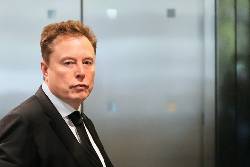
OAKLAND, Calif. (AP) — Lawyers for Elon Musk and OpenAI made their final arguments Thursday in the landmark trial whose outcome could shape the future of artificial intelligence.
Musk, the world's richest man, was a co-founder of OpenAI, which started in 2015 and went on to create ChatGPT. His lawsuit filed in 2024 accuses OpenAI CEO Sam Altman and his top deputy of betraying a plan to keep it as a nonprofit and shifting into a moneymaking mode behind his back.
The trial’s outcome could sway the balance of power in AI — breakthrough technology that increasingly has raised fears about its potential impacts on the economy, society and even humanity's survival. Scrutiny of Altman’s leadership comes at a crucial time for the company and its competitors, Musk’s own AI firm and Anthropic, formed by a group of seven ex-OpenAI leaders.
All three firms are moving toward planned initial public offerings that are expected to be among the largest ever. Musk is seeking damages and changes to OpenAI’s business structure, as well as Altman’s ouster from company leadership. If Musk wins, it could derail OpenAI’s IPO plans.
Timing of lawsuit is key question
One of the jury’s tasks is to decide if Musk filed his lawsuit in time. Much of the testimony has centered on OpenAI’s early years after its founding, but there’s a relatively short timeline to allege the claims Musk is making of breach of charitable trust and unjust enrichment.
OpenAI has argued that Musk waited too long and cannot claim harms that occurred before August 2021.
The judge wrote in a court filing last month that “if the jury finds that Musk failed to file his action within the statute of limitations, it is highly likely” that she will “accept that finding and direct verdict to the defendants.”
If the jury decides the lawsuit was filed in time, it then has to decide if OpenAI had a “charitable trust” that was broken by OpenAI and its executives. Musk's other claim means jurors must determine whether Altman, Greg Brockman — co-founder and president — and OpenAI unjustly enriched themselves at Musk's expense.
For Microsoft, a co-defendant in the trial, the jury has to decide whether the company aided and abetted that breach. Musk invested $38 million in OpenAI during its first years, and Microsoft became OpenAI's biggest investor after Musk's departure.
Musk lawyer focuses on Altman's credibility
Altman and Brockman were in the courtroom Thursday, while Musk was in China with President Donald Trump and other prominent tech executives.
Musk’s attorney, Steven Molo, told jurors the Tesla CEO was “sorry he could not be here.”
In his closing arguments, Molo doubled down on claims of Altman's untrustworthiness, pointing to testimony from witnesses who called the OpenAI CEO a “liar.”
"I confronted Sam Altman with the fact that five witnesses in this trial, all people that he’s known for years and worked with, called him a liar under oath. Liar’s a very powerful word in a courtroom,” Molo said.
Those five people were Musk and another co-founder Ilya Sutskever, who was OpenAI’s chief scientist, as well as OpenAI’s former chief technology officer Mira Murati and two ex-board members, Helen Toner and Tasha McCauley.
“Sam Altman’s credibility is directly at issue in this case. He’s the defendants' main witness. The defendants absolutely need you to believe Sam Altman. If you cannot trust him, if you don’t believe him, they cannot win. It’s that simple,” Molo said.
Because Musk, Altman and Brockman never signed a contract that could show they had a charitable trust that OpenAI then broke, Musk's side has made the case that jurors should consider emails and other communication between them — along with everything from OpenAI's website to press interviews — as constituting such a trust.
A question of money
In a terse exchange while jurors were out of the room, U.S. District Judge Yvonne Gonzalez Rogers sharply criticized Musk’s attorney for suggesting to jurors Thursday that Musk wasn’t seeking any money in the lawsuit.
While Musk, before the trial, abandoned a bid for damages for himself, he is still seeking an unspecified amount of money to be paid to fund the altruistic efforts of OpenAI’s charitable arm.
Musk is seeking “billions of dollars of disgorgement,” the judge said, ordering Molo to either retract his statement or “drop your claim for billions of dollars.” They later agreed that the judge would correct the statement to jurors.
OpenAI says Musk has no evidence
Sarah Eddy, a lawyer for OpenAI, said it was Musk who has misrepresented details surrounding OpenAI's nonprofit founding and his subsequent falling out with the other co-founders.
“Mr. Molo says that Sam Altman can’t be trusted,” she said. “Mr. Musk is the one whose testimony is contradicted by every other witness.”
As OpenAI has argued throughout the trial, Eddy said Musk knew of and supported plans for OpenAI to form a for-profit company that would still support its mission to benefit humanity.
“Mr. Musk, he has tried to persuade you that his years-ago donations to OpenAI came with specific strings attached, that these strings were strong enough to last forever to tie OpenAI up in knots as it tries to pursue its mission, and that these strings gave Mr. Musk perpetual rights over OpenAI,” Eddy said. "But Mr. Musk has come nowhere close to making that case.”
She brought up testimony that Musk had discussed his children inheriting control of OpenAI.
“He wanted dominion over AGI,” she said, referring to artificial general intelligence, a term for advanced AI technology that surpasses humans at many tasks. “That’s why this was such a high stakes conversation. Mr. Musk wanted total control. Maybe, maybe he’d give it up over time, or maybe not. But it was up to him and that was the problem.”
Protesters outside court bash both sides
Outside the courthouse, more than a dozen protesters bashed both parties as billionaires who were eroding the environment, workforce and people’s mental health and whose industry would wipe out humanity.
There were signs that read “Stop replacing healthcare workers with chatboxes!” and “No future for workers in Musk-Altman fascist world.”
It doesn’t matter which side wins in court, said Saru Jayaraman, who is part of a campaign to push a $30 hourly wage on election ballots this fall.
“The thing is, we’re all losing, that’s the main point. Who’s really winning? The two of them,” she said, referring to Altman and Musk.
Phoebe Thomas Sorgen, a peace activist from nearby Berkeley, said there needs to be a global ban on artificial intelligence and used a slang term to say everyone is awful here, except for the jurors and activists.
“Both parties in this trial are completely hypocritical. They both claim that they’re developing AI for the benefit of humanity and that’s a lie. They’re developing it for greed.”
___
Associated Press Writer Janie Har contributed to this story. O'Brien reported from Providence, Rhode Island.
... Copyright © 1996 - 2026 CoreComm Internet Services, Inc. All Rights Reserved. | View our