

They may arrive at the same destination, but two passengers on the same flight can have strikingly different travel experiences.
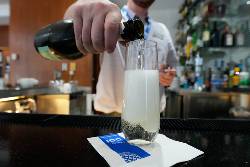
One traveler breezes through a priority security lane and heads straight to an invite-only lounge for craft cocktails and a chef-prepared meal before boarding early. A flight attendant offering a glass of champagne and a warm hand towel welcomes the passenger to a spacious seat at the front of the plane.
The other traveler stands in a line at every step — security screening, a café selling $16 sandwiches, a crowded gate — then boards with one of the final groups, hoping there’s still room for a carry-on in the overhead bin before folding into a cramped middle seat. After the cabin lights dim, sleep comes in fragments, and a travel pillow does little to ease a stiff neck.
The contrasting journeys are no accident. Since the COVID-19 pandemic, the largest U.S. airlines have pulled out all the stops to court premium passengers who are willing to pay for comfort, convenience and exclusivity. Budget-conscious travelers may notice a widening gap between the back of the plane and up front as the carriers increasingly build their businesses around selling first-class, business-class and premium-economy seats.
“We can’t win by trying to provide the cheapest. We have to be able to win by providing the best," Delta Air Lines CEO Ed Bastian said in a recent Fortune podcast interview.
The strategy embraced by Delta and rivals American Airlines and United Airlines marks a notable evolution for an industry that spent decades making air travel more accessible. Now, the nation's largest carriers are reconfiguring aircraft to expand premium seating, designing new fleets with larger premium cabins and investing billions in amenities that extend the top-tier travel treatment beyond their jetliners.
But United CEO Scott Kirby has pushed back on the idea that the industry has become solely focused on chasing big spenders. He said United’s premium investments are part of a broader strategy to boost the experience of every traveler, pointing to initiatives such as seatback entertainment and improvements to the airline’s mobile app.
“We’re investing nose to tail for all customers,” Kirby said last month on financial firm Morgan Stanley’s Exceptional Leaders podcast.
Premium cabins have become airlines’ most valuable real estate
The premium playbook didn’t emerge overnight.
Airlines used to fill empty first-class seats mainly by giving their most loyal frequent flyers free upgrades. Delta rewrote the rules in the early 2010s by using sophisticated pricing tools to offer more of those seats to coach passengers who were willing to pay a little more, said Henry Harteveldt, president of travel advisory firm Atmosphere Research Group.
The strategy unlocked demand airlines hadn’t fully recognized, encouraging more travelers to trade up and laying the groundwork for today’s broader premium push.
“Travelers could and would pay for noticeably more comfort, noticeably better service, noticeably more amenities, if the price was right,” Harteveldt said.
Then came the pandemic. When business travel collapsed and Zoom replaced many corporate trips, airline analysts wondered whether carriers would once again have to lure travelers with cheap fares. Instead, eager leisure travelers proved willing to splurge on premium seats and perks, convincing airlines that demand extended well beyond the traditional business road warrior, Harteveldt said.
That confidence has only grown. Premium demand is now a fixture of quarterly earnings calls, with airline executives regularly touting premium revenue as they compete for higher-spending travelers.
“When you think about what’s different and what’s changed over the last 10 or 15 years, the premium products used to be loss leaders, and now they’re the highest-margin products," former Delta President Glen Hauenstein said last summer. “That’s really the headline.”
Analysts say premium cabins — a category that expanded with the introduction of premium economy seats featuring more legroom and amenities at a fraction of the cost — now generate a disproportionate share of airline revenue compared with the space they take up on commercial aircraft.
On heavily trafficked transatlantic routes, business-class tickets can bring in nearly as much revenue as fares and fees paid by passengers in the much larger economy cabin, according to an analysis by consulting firm McKinsey & Company.
Airlines are competing with chef-designed menus and high-end skin care
The premiumization of air travel has become impossible to miss, even for travelers who only get a glimpse through an airport lounge door or while walking down an airplane aisle.
Delta’s new first-class lounges resemble upscale restaurants, with open kitchens plating dishes such as hamachi crudo, cocktail bars serving made-to-order drinks, soundproof relaxation pods and outdoor decks overlooking the tarmac.
American has partnered with the James Beard Foundation to refresh its lounge menus with dishes like Thai basil and chili crispy shrimp. The airline also redesigned its newest Boeing 787-9 Dreamliners for long-haul international flights around individual business-class compartments with sliding privacy doors, lie-flat seats longer than a standard twin mattress and amenity kits that might include a celebrity facialist's brand of sheet masks and under-eye patches.
United’s newest business-class cubicles add oversized 27-inch entertainment screens, caviar service, luxury skincare products and multi-course dining on long-haul international services. The airline said its revamped menus “feature flavors and dishes” inspired by cities across its network.
“Marie Antoinette would feel very comfortable on any of the big three airlines these days,” said William J. McGee, senior fellow for aviation at the American Economic Liberties Project. “But instead of saying, ‘Let them eat cake’ in the back of the plane, she would say, ‘Let them eat Biscoffs.’”
Air travel is getting more stratified as fuel costs increase fares
The airlines' pursuit of higher-paying passengers shows no loss of momentum. On board Delta's next-generation Airbus A350-1000 aircraft arriving in 2027, nearly half the cabin will be devoted to premium seating. American has said it plans to expand premium cabins by 50% by the end of the decade.
Yet the new era of luxury in the skies is unfolding alongside a very different reality for other U.S. travelers as broader inflationary pressures have added to the strain on household budgets.
New York-based travel advisor Mary Auteri said more of her clients are “experiencing sticker shock” as fares and add-on fees have gotten more expensive since the Iran war broke out and pushed up the price of jet fuel, one of the largest operating costs for airlines.
A group of friends in their 20s recently asked Auteri to price out flights to the sugar-white sand beaches of Punta Cana, a resort town in the Dominican Republic. After she sent them an itinerary, they said they had found what looked like the same flights on Google Flights for more than $100 less.
But the cheaper fares were basic economy tickets that excluded seat assignments, checked bags and flexibility to change plans. Once those costs were added back in, the trip no longer fit their budget.
Baggage fees, seat-selection charges and other add-on costs fall heaviest on economy travelers, McGee said. For wealthier travelers, those fees may amount to little more than an inconvenience. For budget-conscious travelers, they can determine whether a trip happens at all.
“The idea that we’re all created equal? Not in the airlines’ eyes," McGee said. “Not by any means.”
... Copyright © 1996 - 2026 CoreComm Internet Services, Inc. All Rights Reserved. | View our