

ALVARADO, Texas (AP) — A Palestinian woman who was the last person still in immigration detention after the Trump administration's 2025 crackdown on pro-Palestinian activists was released Monday on $100,000 bond after a year in custody, according to her lawyers.
Leqaa Kordia, a 33-year-old from the West Bank who has lived in New Jersey since 2016, had been held in a U.S. immigration detention center in Texas since last March. Kordia was among roughly 100 people arrested outside Columbia University during protests at the school in 2024.
An immigration judge had ordered her released on bond three times. The government challenged the first two rulings, but Kordia was freed Monday after it did not challenge the third.
She was recently hospitalized for three days following a seizure after fainting and hitting her head at the privately run detention facility.
“We are overwhelmed with relief and gratitude at the release of our beloved Leqaa Kordia,” said Hamzah Abushaban, Kordia’s cousin, in a statement from her lawyers. “This past year has taken an unimaginable toll on Leqaa and our entire family.”
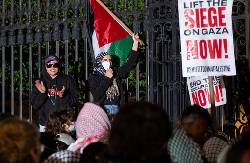
Kordia said she joined the 2024 demonstration after Israel killed scores of her relatives in Gaza, where she maintains deep personal ties. “My way of helping my family and my people was to go to the streets,” she told The Associated Press in October.
The charges against her for the protest were dismissed and sealed. Information about her arrest was later given to the Trump administration by the New York City Police Department, which said it was told the records were needed as part of a money laundering investigation.
Kordia was arrested during a March 13, 2025, check-in with U.S. Immigration and Customs Enforcement in New Jersey. She was detained immediately and flown to Prairieland Detention Center, south of Dallas.
She was among a number of people arrested after the Trump administration began using its immigration enforcement powers on noncitizens who had criticized or protested Israel’s military actions in Gaza, many students and scholars at American universities.
Also among them was Mahmoud Khalil, a former Columbia University graduate student who was arrested last March and spent three months detained in a Louisiana immigration jail before being freed.
But while arrests of campus activists like Khalil drew condemnation from elected officials and advocates, Kordia was not a student or part of a group that might have provided support, so her case remained largely out of the public eye.
Federal officials have accused Kordia of overstaying her visa, while scrutinizing payments she sent to relatives in the Middle East. Kordia said the money was meant to help family members suffering during the war.
An immigration judge found “overwhelming evidence” that Kordia was telling the truth about the payments.
At a hearing Friday, Kordia’s attorneys said she had a neurological condition that had worsened while in custody, putting her at an elevated risk of seizure. They reiterated that she could stay with U.S. citizen family members and did not pose a flight risk.
The immigration judge, Tara Naslow, agreed.
“I’ve heard testimony. I’ve seen thousands of pages of evidence presented by the respondent, and very little evidence presented by the government in any of this,” Naslow said.
An attorney for the Department of Homeland Security, Anastasia Norcross, said the government opposed the release of Kordia, regardless of the bond. She did not say at the time whether it would appeal for a third time.
___
Offenhartz reported from New York.
... Copyright © 1996 - 2026 CoreComm Internet Services, Inc. All Rights Reserved. | View our