

DENVER (AP) — A former funeral home owner who helped her ex-husband hide nearly 200 decomposing bodies faces sentencing Friday for corpse abuse in a case that forced Colorado officials to clamp down on an industry plagued by repeated scandal and notoriously lax oversight.
A plea agreement calls for Carie Hallford to receive from 25 to 35 years in prison during her appearance before District Judge Eric Bentley in Colorado Springs.
Her ex-husband, Jon Hallford, received a 40-year sentence on corpse abuse charges at a February hearing in which he was called a “monster” by family members of those whose bodies were left to rot.
Carie Hallford was the public face of Return to Nature, dealing with bereaved customers at the couple's funeral home in Colorado Springs. Jon, still her husband at the time, performed much of the physical work at another location south of Colorado Springs in Penrose, where neighbors in 2023 noticed a foul odor and complained.
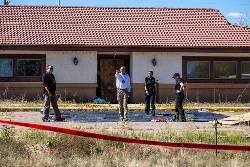
Authorities found bodies piled throughout the bug-infested Penrose building in various states of decomposition.
The case became the most egregious in a string of criminal cases involving Colorado funeral homes as details emerged about the Hallfords’ lavish spending and their pattern of defrauding customers.
Just months before the bodies were found in Penrose, a mother and daughter who operated a funeral home in the western Colorado city of Montrose were sentenced to federal prison after being accused of selling body parts and giving clients fake ashes.
In 2024, authorities in Denver arrested a financially troubled former funeral home owner who kept a deceased woman’s body in a hearse for two years at a house where police also found the cremated remains of at least 30 people.
And last year, state inspectors found 24 decomposing bodies and multiple containers of bones behind a hidden door of a Pueblo funeral home owned by the Pueblo County coroner and his brother. It was the first ever inspection of that mortuary under new rules that allow all funeral homes to be routinely inspected.
Carie Hallford asked for leniency in March when she was sentenced in a related federal fraud case, saying she was a victim of abuse and manipulation in her marriage.
But she enters Friday’s hearing with limited sympathy from victims such as Crystina Page, whose son, David, died in 2019. His body languished for years inside the room-temperature building in Penrose with other corpses before their discovery.
Jon Hallford “was the monster under the bed, but Carie was the one who fed the monster,” Page said. Page and others received fake ashes instead of the cremated remains they were promised.
The Hallfords, who divorced following their arrest, received prison sentences in the related federal fraud case — 18 years for Carie and 20 years for Jon. They have each appealed.
State officials and industry representatives said this week that industry reforms adopted by Colorado lawmakers are making a difference.
In response to the Hallford case, the state mandated inspections and adopted an industry licensing system. The changes put Colorado “in the middle of the pack” compared to regulation in other states, acknowledged Sam Delp with the state Department of Regulatory Agencies, which oversees the funeral industry.
“We were the only state in the country that didn’t regulate them,” said Delp, who directs the agency's Division of Professions and Occupations.
Matt Whaley, president of the Colorado Funeral Home Directors Association, suggested that customers have become more cautious after years of news coverage about Return to Nature and other businesses where crimes occurred.
More often now, family members ask to be present for a loved one’s cremation rather than just receive the ashes after the fact, Whaley said.
“The confidence level of a funeral professional in the state of Colorado is questioned, and we’ve got to work hard, one family at a time, to build that trust back,” he said.
Blanca Eberhardt, a licensed funeral director who previously practiced mortuary science in Indiana, Texas and Hawaii, recalled moving to Colorado and being appalled at the mistreatment of some corpses inside a funeral home where she worked in Pueblo. For Eberhardt, the experience confirmed Colorado's reputation for lacking basic rules such as licensing for funeral home directors and routine inspections.
“The joke has been for the last 40 years if you lose your license in another state, just move to Colorado," she said.
__
Brown reported from Billings, Montana. Associated Press journalist Thomas Peipert contributed to this story.
... Copyright © 1996 - 2026 CoreComm Internet Services, Inc. All Rights Reserved. | View our