

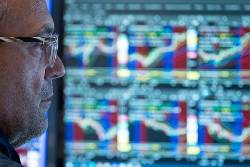
Stocks on Wall Street closed higher Thursday as a recent run-up in bond yields eased further and big technology companies rallied, helping the market recoup its losses from earlier in the week.
The S&P 500 rose 1.1%. The Dow Jones Industrial Average gained 1.2%, and the Nasdaq composite closed 1.4% higher. The indexes are now on track to post a gain for the week. The mixed start to September follows a mostly positive August during which every major index notched a gain for the month.
Big technology and communication services stocks accounted for a large share of the rally. Their huge valuations tend to give them more influence over the broader market’s direction.
Microsoft rose 2.7%, Apple gained 1% and Meta climbed 3%.
Giant chip maker Nvidia, whose high-end chips have emerged as AI’s best building blocks, rose 1.8% after saying it would buy the artificial intelligence platform Hugging Face for $13 billion.
Oil prices initially ticked higher as the six-month long U.S. war with Iran intensified, but ended up little changed.
Iran fired at Kuwait on Thursday in retaliation for U.S. bombardments earlier in the week. The fighting between the U.S. and Iran heated up after the U.S. hit Iranian rocket launchers Sunday on an island in the Strait of Hormuz, saying Iran was planning to use them to send mines into the waterway.
The renewed fighting has sent U.S. crude prices sharply higher this week, though the momentum cooled Thursday. After rising in the early going, the price of Brent crude, the international standard, fell 0.1% to settle at $95.52 per barrel. Benchmark U.S. crude edged up 0.3% to settle at $91.30 a barrel.
Rising oil prices have added to existing inflationary pressures and exacerbated a bond-market sell-off earlier this week.
But bond yields have shown signs of stabilizing.
The yield on the 10-year Treasury, which influences mortgage rates, dropped to 4.77% from 4.79% late Wednesday. It has been rising steadily throughout the year and was as low as 4.20% at the beginning of 2026.
The yield on the 2-year Treasury, which closely tracks expectations for Federal Reserve moves on interest rates, slid to 4.34% from 4.39%. It remains significantly higher for the year, though, and was as low as 3.50% at the beginning of 2026.
It's likely some investors took remarks Thursday by Federal Reserve governor Christopher Waller as a sign that perhaps the Fed isn’t as likely to raise its short-term interest rates at its next policy meeting in two weeks as previously expected.
Waller said that if new data next week shows inflation is cooling, he “would be inclined” to keep the Fed’s benchmark interest rate unchanged. Should the data show hotter inflation, however, Waller noted he would consider a rate hike.
After the remarks, investors were betting on a 50.4% chance that the Fed will raise rates at its upcoming meeting, down from a 63.2% chance on Wednesday, according to CME FedWatch.
“The market probably assumes that the Fed is going to hold this month,” said Ross Mayfield, investment strategist at Baird. “That’s bullish and kind of goes hand-in-hand with the pause or the stabilization in bond yields.”
Traders also had their eye on several companies following their latest quarterly snapshots.
Snowflake jumped 16.6% after its quarterly profit and revenue blew past analysts’ estimates. The company noted that artificial intelligence continues to be a strong driver for its business.
Other tech companies echoed the theme of strength in AI-related demand, but that didn't always translate into a stock price boost.
Broadcom's results beat Wall Street’s estimates and the chipmaker forecast that its AI chip revenue would double in its fiscal year that ends in 2028. But its stock fell 2.7% after its revenue outlook fell short of expectations.
Hewlett Packard Enterprise also raised its guidance for cloud and AI demand strength as it reported quarterly results that topped analysts’ estimates. The stock was in the red much of the day, but finished with a 5% gain.
Elsewhere in the market, Tyson Foods fell 7.3% after the meat company lowered its guidance for revenue and operating income for its fiscal year, citing margin compression due to volatile cattle prices amid a severe U.S. cattle shortage.
And Victoria's Secret slumped 13.2% after its latest quarterly earnings beat Wall Street estimates, but its revenue fell short of expectations.
In economic news, the Labor Department reported Thursday that more Americans filed for unemployment benefits last week, but layoffs are still rare and jobless claims remain at historically low levels.
On Friday, the crucial U.S. employment report for August is released. The previous report for July showed that the jobs market stalled, with employers cutting positions.
Both inflation and the jobs market have been key focuses for Wall Street and the Federal Reserve.
The Fed is trying to balance its tasks of supporting employment and taming inflation. Wall Street expects the central bank to raise interest rates before the year ends in an effort to cool inflation, which remains well above 3%. The Fed has a stated goal of cooling inflation to a target of 2%.
The government will release August inflation figures Sept. 11, shortly before the Fed's policymaking committee's next meeting, which ends on Sept. 16.
All told, the S&P 500 rose 81.11 points to 7,747.71. The Dow gained 624.16 points to 53,686.11, and the Nasdaq added 366.23 points to finish at 26,584.06.
Markets rose in Europe, but ended mixed in Asia.
... Copyright © 1996 - 2026 CoreComm Internet Services, Inc. All Rights Reserved. | View our