

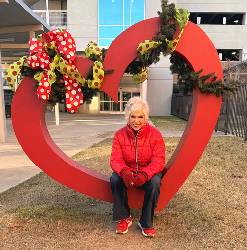
Lori Sepich smoked for years and sometimes skipped taking her blood pressure medicine. But she never thought she’d have a heart attack.
The possibility “just wasn't registering with me,” said the 64-year-old from Memphis, Tennessee, who suffered two of them 13 years apart.
She’s far from alone. More than 60 million women in the U.S. live with cardiovascular disease, which includes heart disease as well as stroke, heart failure and atrial fibrillation. And despite the myth that heart attacks mostly strike men, women are vulnerable too.
Overall in the U.S., 1 in 5 women dies of cardiovascular disease each year, 37,000 of them from heart attacks.
Cardiovascular disease is “the No. 1 killer of women. It will affect you or someone you know,” said Dr. Sharonne Hayes, a cardiologist at the Mayo Clinic in Rochester, Minnesota. “Knowing what to do if you have symptoms of a heart attack and taking action if you do, that’s really important.”
Do what you can to prevent heart attacks
There are several ways anyone can reduce their risks.
The American Heart Association has created a list called “Life’s Essential 8”: eat better, quit tobacco, get healthy sleep, be more active, control cholesterol, and manage weight, blood sugar and blood pressure.
Dr. Stacey Rosen, association president, advises getting regular checkups to talk about these preventive measures, keep tabs on your health and discuss any family history of heart problems.
Doctors also suggest discussing risk factors that uniquely or disproportionately affect women.
Women are more likely to have autoimmune conditions like lupus or rheumatoid arthritis, which cause inflammation that can raise heart disease risk. They’re also more likely to suffer from depression, which is associated with inflammation and unhealthy behaviors like staying in bed.
Other conditions associated with an increased risk of cardiovascular disease are a history of high blood pressure or diabetes while pregnant, miscarriages or stillbirth. Hot flashes and night sweats during menopause have also been linked to a greater risk of high blood pressure and other cardiovascular risk factors.
Be aware that heart attacks don’t happen like they do in the movies
When people think about heart attacks, many envision a middle-aged man suddenly clutching his heart and falling to the ground.
But in reality, Hayes said, “it’s not going to probably be one of those Hollywood heart attacks.”
Chest pain or discomfort is a usual symptom, but far from the only one.
“What’s different about women is that they are more likely than men to have other symptoms as well,” Rosen said.
Those include back pain, shortness of breath, cold sweats, tiredness, nausea, lightheadedness, an anxious feeling, jaw pain and finger tingling.
Experts aren't sure exactly why symptoms differ between men and women, but some research suggests that physiological differences may play a role.
Another difference: Symptoms may come on a bit more subtly for women than men. Hayes hears a common refrain from patients: “I got the symptom and it waxed and waned a little bit over time, but I knew something wasn’t right.”
Take immediate action if you suspect a heart attack
“If you think that there’s even a chance that you’re having a heart attack, that’s when you call 911,” Rosen said, adding that it's better to “err on the side of over-concern than err on the side of minimizing something that could be quite serious.”
Doctors recommend taking an ambulance to the hospital, which is more equipped to handle emergency situations than urgent care centers or a doctor's office.
Any delays in getting the right care could be harmful or even deadly.
“If you wait too long,” Rosen said, “the damage can be more significant.”
Don’t be in denial about heart attack symptoms
When Sepich had her first heart attack, she waited too long. She had largely been in denial about her heart problems since being diagnosed with severe, hereditary high blood pressure at 17.
On Easter Sunday 2005, she woke up to extreme chest pressure, nausea and pain radiating down her arms.
“I chose to ignore those signs that day because I was absolutely in shock,” she said. “I was scared.”
She attended Mass and a family lunch and went to work the next day. She eventually went to the ER at her doctor's urging, where she wound up having six stents placed and spending a week in the hospital.
She acted more quickly when she had her second heart attack, and got another stent placed after her cardiologist found a nearly complete blockage in the heart's biggest artery.
Sepich now keeps her blood pressure under control, hasn’t smoked in more than two decades and exercises almost every day.
She urges other women to be honest with themselves about heart disease.
“I could justify my actions from denial. I could just be like, ‘Oh, it’s not gonna hurt you,’” Sepich said. “Well, it does hurt you. It can kill you.”
___
The Associated Press Health and Science Department receives support from the Howard Hughes Medical Institute’s Department of Science Education and the Robert Wood Johnson Foundation. The AP is solely responsible for all content.
... Copyright © 1996 - 2026 CoreComm Internet Services, Inc. All Rights Reserved. | View our