

WASHINGTON (AP) — A key inflation gauge accelerated in April to the highest level in three years, squeezing Americans' finances and creating political challenges for President Trump and congressional Republicans with midterm elections just five months away.
Inflation jumped to 3.8% in April compared with a year ago, the Commerce Department said Thursday, up from 3.5% in March and the highest since May 2023. On a monthly basis, prices rose 0.4%, down from the 0.7% jump in March but still higher than the inflation-fighters at the Federal Reserve would prefer.
Thursday’s inflation report also showed that in addition to gasoline, prices for groceries, clothing and electricity are also on the rise, indicating that inflation may be growing more entrenched. Inflation is notably above the Federal Reserve's target of 2%, which means Fed policymakers may decide to forego any cuts to their key short-term interest rate this year. Some officials have signaled that the central bank's most substantial move under new Fed Chair Kevin Warsh could be a rate hike, rather than a cut.
Yet Trump and some his top officials are showing little concern about higher prices and the impact of the Iran war on Americans' financial health. Consumers have a dim view of the economy and have soured on the Trump administration's economic policies. Thursday's report showed that Americans' after-tax, inflation-adjusted incomes fell for the third straight month, while spending, adjusted for inflation, barely rose.
Trump has said that increases in gas prices — up more than 50% since the U.S. and Israel launched attacks on Iran — amount to “peanuts.” He previously said he does not consider Americans’ personal finances “even a little bit” when mulling his options on the war.
And on Wednesday, Treasury Secretary Scott Bessent said higher prices would be “transitory,” reviving an ill-fated term used by former Fed Chair Jerome Powell to describe the 2021-22 inflation spike that became a forceful political tailwind for Trump in his campaign for a second presidential term.
Excluding the volatile food and energy categories, core inflation rose to 3.3% in April from 3.2% the previous month. It is the highest core figure since October 2023. One positive sign in the report: Core prices rose just 0.2% in April from March, down from 0.3% the previous month.
Dan North, senior economist at Allianz Trade North America, acknowledged the core price increase isn't “huge,” but added, “it’s the wrong way, and we think it will continue in the wrong way because there are so many inflation pressures in the pipeline.”
Americans' incomes were unchanged in April from March, in part because farm incomes fell after a large government aid package ended last month. Adjusted for inflation, personal income actually slipped 0.1% last month.
Spending rose 0.5% in April from March, though most of that reflected price increases. Adjusted for inflation, spending rose just 0.1% in April, down from 0.3% the previous month.
“Signs of stress are building inside the American household across the economy,” Joe Brusuelas, chief economist at RSM, a tax advisory firm, said. “Inflation-adjusted spending, disposable income ... point to a slowing in May spending as inflation approaches a peak on the back of a historic supply shock."
The U.S. economy grew at a modest 1.6% annual pace from January through March, according to a separate report from the Commerce Department Thursday. The country’s gross domestic product — the nation’s output of goods and services — rebounded from a lackluster 0.5% expansion the last quarter of 2025 when growth was hobbled by the 43-day federal government shutdown.
The first-quarter growth, which covered the first month of the Iran war, was a downgrade from the 2% expansion Commerce initially reported.
Resilient consumer spending — mostly by upper-income households — and ongoing investment in artificial intelligence infrastructure are helping propel modest growth.
Growth in consumer spending, which accounts for two-thirds of U.S. economic activity, slowed to 1.4% in the first quarter from 1.9% at the end of 2025 and was down from the 1.6% preliminary first-quarter estimate. But business investment, likely driven by spending on artificial intelligence, rose at a 7% pace.
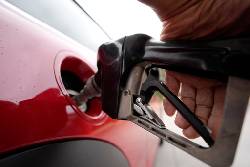
Gas prices averaged of about $4.50 a gallon nationwide for three weeks this month before slipping to $4.43 on Thursday, according to the AAA motor club. Gas averaged $2.98 a gallon the day before the Iran war began.
Yet the cost of many other goods and services have picked up in recent months, raising concerns among many Fed officials that inflation is being pushed higher by tariffs and other factors in addition to the war. The cost of services such as dental visits, car repairs and veterinarian visits have been rising sharply, and clothes, toys, and groceries are also seeing outsize price gains.
Rapid investment in artificial intelligence centers also appears to be driving up the cost of computer equipment and software, adding to inflationary pressures. Electricity prices have also spiked from a year ago.
... Copyright © 1996 - 2026 CoreComm Internet Services, Inc. All Rights Reserved. | View our