

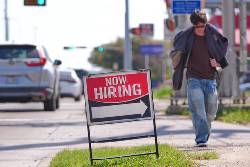
WASHINGTON (AP) — American employers added a surprisingly strong 178,000 new jobs last month, rebounding from a dismal February. And the unemployment rate dipped to 4.3%.
The Labor Department reported Friday that hiring marked a rebound from the loss of 133,000 jobs in February. The job gains were about three times what economists had forecast.
The unemployment rate was down from 4.4% in February. That is partly because the labor force — those working and looking for work — dropped by 396,000 in March so fewer people were competing for jobs.
Health care companies added 76,400 jobs last month, boosted by return of 31,000 Kaiser Permanente employees to work after the end of a strike in February. Factories added 15,000 jobs last month and construction companies 26,000, probably because of warmer weather last month.
Average hourly wages were up 0.2% from February and 3.5% from March 2025, a number consistent with the Federal Reserve's 2% annual inflation target.
The U.S. job market has been in a slump over the past year as companies have been hesitant to hire because of high interest rates, uncertainty over President Donald Trump's policies and over how artificial intelligence is going to affect their businesses. The war in Iran has clouded the outlook, and most economists say the impact of the war and higher energy prices were probably not fully reflected in the March jobs numbers.
The American job market has been in a slump.
Last year, employers added an average of just 9,700 jobs a month, the weakest hiring outside a recession since 2002. Businesses have been reluctant to bring on new workers partly because of uncertainty arising from President Donald Trump’s trade and immigration policies. One measure released by the Labor Department on Monday showed the weakest hiring since April 2020 – in the middle of COVID-19 lockdowns.
But firms have also been reluctant to let go of their existing employees, creating what economists describe as a “no-hire, no-fire’’ scenario that locks young applicants out of the job market. At the same time, there are growing worries that artificial intelligence is taking entry-level jobs.
New jobs are heavily concentrated in health care and social assistance (which includes day care and vocational rehabilitation centers). That category accounted for more than half the jobs created last month. The trend reflects an aging U.S. population. A graying Japan saw the same thing in the early 2010s, Vanguard economist Adam Schickling wrote in a commentary ahead of Friday's jobs report.
... Copyright © 1996 - 2026 CoreComm Internet Services, Inc. All Rights Reserved. | View our