

WASHINGTON (AP) — A federal judge on Thursday ruled that the Defense Department is violating his earlier order to restore access to the Pentagon for reporters.
U.S. District Judge Paul Friedman sided with The New York Times earlier this month in deciding that the Pentagon’s new credential policy violated journalists’ constitutional rights to free speech and due process. He sided again with the Times in saying that the Pentagon had tried to evade his ruling by putting in new rules that expel all reporters from the building unless guided by escorts.
“The department simply cannot reinstate an unlawful policy under the guise of taking ‘new’ action and expect the court to look the other way,” Friedman wrote.
Friedman had ordered Pentagon officials to reinstate the press credentials of seven Times reporters and stressed that his decision applies to “all regulated parties.”
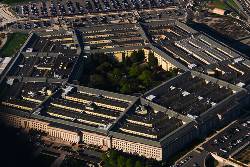
The Pentagon building serves as the headquarters for U.S. military operations.
A dispute brewing since October
In October, reporters from mainstream news outlets walked out of the building rather than agree to the new rules. The Times sued the Pentagon and Defense Secretary Pete Hegseth in December to challenge the policy.
Times attorneys accused the Pentagon of violating the judge’s March 20 order, “both in letter and spirit” with its revised policy. The newspaper said that Pentagon was also trying to impose unprecedented rules dictating when reporters can offer anonymity to sources.
Friedman said that the access the Pentagon made available to permit holders “is not even close to as meaningful as the broad access” they previously had.
Government lawyers said the Pentagon’s revised policy fully complies with the judge’s directives. Pentagon spokesperson Sean Parnell has said the administration would appeal Friedman’s March 20 decision.
The Pentagon Press Association, which includes AP reporters, said the Pentagon’s interim policy preserves provisions that Friedman deemed to be unconstitutional while also adding new restrictions on credential holders.
“In effect, Plaintiffs ask this Court to expand the Order to prohibit the Department from ever addressing the security of the Pentagon through a press credentialing policy with conditions that may address similar topics or concerns as the enjoined conditions. The Order does not say that, and this Court should not read it to say that,” Justice Department attorneys wrote.
Current Pentagon press corps agreed to policy
The current Pentagon press corps is comprised mostly of conservative outlets that agreed to the policy. Journalists from outlets that refused to consent to the new rules, including from The Associated Press, have continued reporting on the military from outside the Pentagon.
Friedman, who was nominated to the bench by Democratic President Bill Clinton, said recent U.S. military operations in Venezuela and Iran underscore the need for public access to information about government activities.
“Those who drafted the First Amendment believed that the nation’s security requires a free press and an informed people and that such security is endangered by governmental suppression of political speech. That principle has preserved the nation’s security for almost 250 years. It must not be abandoned now,” the judge wrote.
Friedman said the challenged policy is clearly designed to weed out “disfavored journalists” and replace them with those who are “on board and willing to serve” the administration.
“That," he wrote, “is viewpoint discrimination, full stop.”
... Copyright © 1996 - 2026 CoreComm Internet Services, Inc. All Rights Reserved. | View our